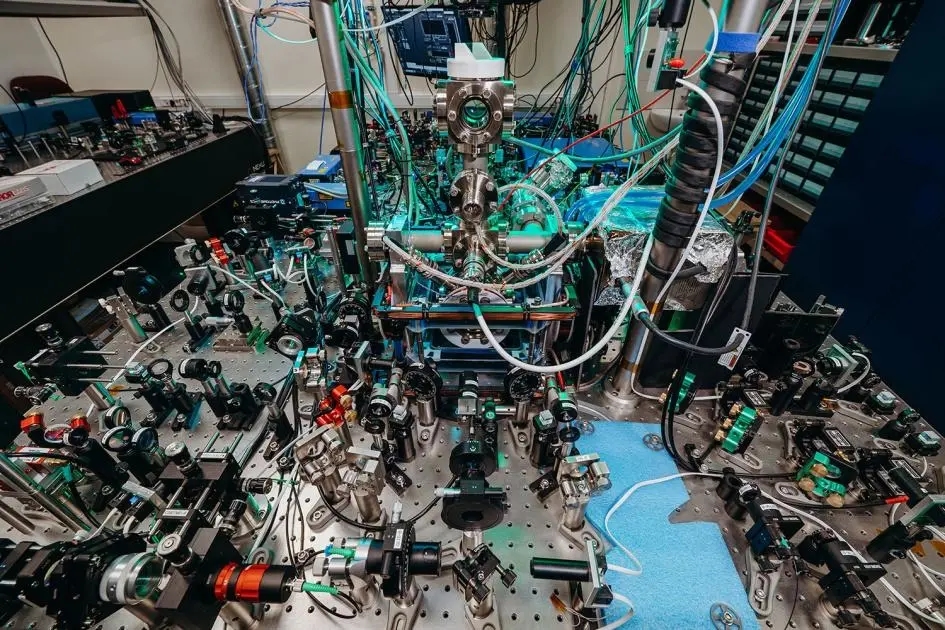
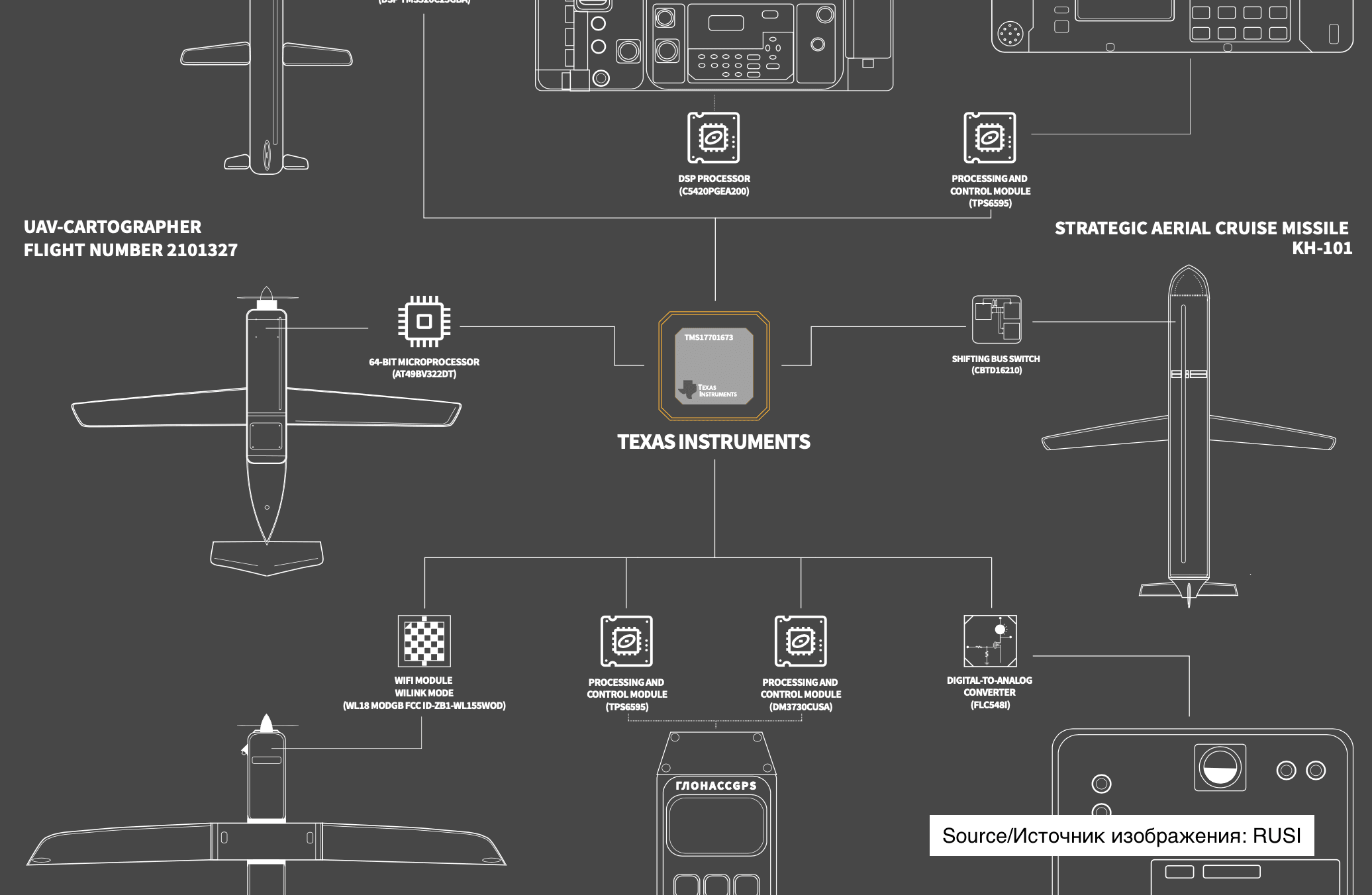
The Insider has found that despite sanctions, Russia continues to regularly purchase advanced industrial laser equipment, allowing it to develop and manufacture its own military communications systems, lidars, target designators, and inertial navigation systems. Some purchases may also point to efforts to increase the capabilities of Russian quantum computers, which could significantly enhance the capabilities of Russian intelligence services by cracking encryption.
- 1.Cracking the world’s encryption: will Putin get a cryptographically relevant quantum computer?
- 2.Advanced laser technologies — not just for quantum computers
- 3.How the West is helping Putin with lasers
- 4.What Russia’s modern private laser industry looks like
- 5.More widespread military applications of lasers
Cracking the world’s encryption: will Putin get a cryptographically relevant quantum computer?
The Insider has found that Russia continues to import advanced measuring instruments, components, and materials for optics and quantum electronics. The equipment being purchased — along with the research interests of the importers and end users — suggests that Russia is seeking to develop advanced laser technologies despite its continued reliance on imports for more basic laser applications.
If any country succeeds in building a “cryptographically relevant” quantum computer, and if such a machine falls into the hands of a totalitarian regime, it would significantly alter the international balance of power. Even without a quantum computer, however, mastery of advanced laser technologies would allow Russia’s military-industrial complex to develop domestic production capabilities across a range of military sectors far more quickly and effectively than it has managed to do so far.
A “cryptographically relevant” quantum computer in the hands of a totalitarian regime would significantly alter the international balance of power
Quantum computers are expected to outperform classical computers dramatically on tasks such as cracking encryption. Existing quantum computers, however, are not yet “cryptographically relevant” — meaning they remain far from being able to break the standard encryption algorithms in use at the present time. According to the latest estimates, a cryptographically relevant quantum computer capable of breaking RSA encryption with a 2,048-bit key would require at least one million physical qubits, with the number needed to break elliptic-curve cryptography with a 256-bit key estimated at around 10,000 physical qubits.
How a quantum computer works
Building a quantum computer capable of breaking modern encryption remains beyond the capabilities of even Google and IBM. IBM’s Condor quantum computer, for example, has 1,121 physical qubits based on superconducting technology. Quantum computers with around 100 qubits can be considered commercially available, in a limited sense, to major research institutions in the West.
Estimates vary on the countdown to Q-day — the point at which a cryptographically relevant quantum computer becomes available. Cloudflare, which helps secure websites around the world, cites the policies and research interests of IBM and Google to put Q-day in 2029 or 2030. In fact, the company is adjusting its own policies accordingly, transitioning to “post-quantum” protocols designed to remain resistant to the sorts of quantum attacks that could materialize in the foreseeable future.
Why photonic quantum computers require laser equipment
Russia’s most powerful quantum computers have been developed by the Lebedev Physical Institute (LPI), Rosatom, Moscow State University (MSU), and the Russian Quantum Center. The LPI–Rosatom computer has the equivalent of 70 qubits and uses ytterbium ions. MSU’s neutral-rubidium-atom computer has 72 qubits. The Russian Quantum Center’s computer uses trapped cold calcium ions and has the equivalent of 72 qubits. According to the Scientific Russia website, a 16-qubit superconducting quantum computer has been developed at the National University of Science and Technology MISIS.
The Russian Quantum Center is also involved, and in 2025, its researchers were ready to showcase a 35-qubit photonic quantum computer. The challenge now is to scale it up.
According to the Russian tax authorities’ records of fines, the work on a quantum computer for the Russian Quantum Center is being carried out by a Rosatom entity, joint venture Quantum Technologies. This conclusion is also supported by the numerous quantum computing patent applications filed by Quantum Technologies covering integrated circuit topologies for both photonic and superconducting quantum computers, as well as quantum computing algorithms and error-correction codes. Notably though, Quantum Technologies does not appear in customs records, suggesting that other organizations are handling equipment purchases on its behalf.
Such purchases are often made by subsidiaries or other companies linked through a common founder. In the case of the Russian Quantum Center, one possible candidate is its affiliated company, K2 LLC — almost all current and former K2 employees also have work experience at Quantum Technologies, including in specialized units responsible for procurement and logistics, cost accounting, reporting to federal executive authorities, support for the Committee on Quantum Technologies, and supplying equipment and consumables. This staffing structure suggests that K2 may be acting as a procurement agent for Quantum Technologies.
Advanced laser technologies — not just for quantum computers
Russian propagandists claim that Russia is now using lasers to shoot down drones; however, independent experts question the effectiveness of these systems. Whatever the case, advanced laser technologies are essential to the military-industrial complex.
Manufacturing complex-shaped components, additive manufacturing, welding and cutting, and quality control are all vital to industries such as aircraft and drone production, and all require sophisticated laser equipment. Some laser technologies, notably lidars and 3D scanners, also have direct military applications in guiding drones, artillery, and loitering munitions, as well as in reconnaissance. For years, however, Russia remained a consumer rather than a developer of laser technologies, and its own solutions were uncompetitive.
As recently as a decade ago, a trade publication reported that there were 10 Western and 100 Chinese laser specialists for every Russian one. Even during the relatively prosperous 2000s, foreign experts were critical of the capabilities of research lasers at Russian scientific centers. Industrial laser technology, meanwhile, remained largely dependent on imports, leaving many options unavalable after Western sanctions were levied in 2014. Russian-made lasers were not used at all in consumer or medical devices. Russia’s advanced laser sector was further devastated not only by neglect of science but also by the criminal prosecution of laser specialists amid the political repression of the 2020s.
Russia’s advanced laser industry collapsed not only because of the neglect of science, but also because laser specialists were prosecuted
According to data reviewed by The Insider, Russia imported $250 million worth of industrial laser equipment in 2024, excluding consumer and medical laser devices, civilian telecommunications equipment, and equipment for the entertainment industry.
The imports consisted primarily of high-power equipment: laser-cutting machines for sheet metal, pipes, other metal workpieces, and glass; machines for 3D cutting, engraving, and laser cleaning; laser welding and sintering machines; and equipment for high-precision manufacturing and measurement. The latter category included laser equipment for chip manufacturing, 3D printers, coordinate measuring machines, lidars, 3D laser scanners, rangefinders, sights, interferometers, particle-size analyzers, weld-seam inspection devices, and film-thickness gauges.
The Insider also found that Russia had imported components and assemblies in recent years to manufacture its own industrial lasers. These included blanks for active laser elements (neodymium-doped yttrium aluminum garnets and other crystals), lenses transparent to the relevant wavelengths, optical fibers, high-precision polishing machines, laser beam profile meters, and spectrometers. This suggests that efforts are also underway to rebuild Russia’s domestic laser industry, rather than relying solely on off-the-shelf Chinese laser equipment.
How the West is helping Putin with lasers
Russia imports predominantly sophisticated industrial laser equipment of Chinese origin, but approximately 10% is manufactured in Germany, Italy, Switzerland, Japan, the United States, and Israel. Among Western products, the most prominent suppliers by volume include Leica Geosystems (surveying scanners), Adige SPA (tube-cutting systems), Toptica Photonics AG (laboratory lasers), Stiefelmayer Lasertechnik GmbH & Co. KG (laser-cutting machines), Z-Laser GmbH (laser-cutting and welding equipment), and Sick AG (laser scanners). The leading beneficiaries of China’s laser-equipment trade include Jinan Senfeng Laser Technology, Hubei Jiuzhiyang Infrared System, Shandong Oree Laser Technology, and HSG Laser.
Supplies came almost exclusively from China, Turkey, and Israel. Individual items were shipped directly from Italy and Germany, accounting for less than 1% of the total.
Israel remains virtually the only Western country from which industrial laser equipment continued to be sold openly and directly to Russia in 2023–2025. The company that benefited in practice, regardless of its degree of involvement or awareness, was Ophir Optronics, registered in Israel but owned by the publicly traded American corporation MKS Inc. Operating in Russia under the Ophir Optronics name, the Russian company Kristalltechno LLC trades in and imports laser beam profile and spectrum analyzers.
The use of Ophir Optronics’ name, trademark, and logo in Russian commercial courts has not been challenged to date. Kristalltechno LLC has registered declarations of conformity in Russia covering a wide range of Ophir Optronics industrial cameras and their components.
On paper, the equipment is supplied by intermediaries in Turkey, Kyrgyzstan, the United Arab Emirates, China, and Hong Kong. However, customs records for some shipments identify Israel, rather than the country of the nominal supplier, as the country of dispatch.
In Russia, the equipment was most often received by Kristalltechno LLC, an established supplier to the military-industrial complex. According to 2024 data, the company did business with such Russian defense-sector enterprises as the Priborostroitelny Zavod Federal State Unitary Enterprise, the Ural Optical and Mechanical Plant (UOMZ), and the Ekran Research Institute. In effect, Kristalltechno was Ophir Optronics’ alter ego in Russia, apparently engaged in both manufacturing and resale. Curiously, according to the Israeli newspaper Haaretz, Ophir Optronics has ties to Israel’s military establishment.
The Insider contacted Ophir Optronics for comment. The company responded through a representative from Kekst CNC, a reputation-management firm hired by MKS. A journalist from The Insider spoke with the representative by phone several times.
The representative issued the following statement:
“Ophir ceased working with Kristalltechno in early 2022, when the war began. We are not aware of any Ophir products being supplied to Russia through third parties. We were unaware that Kristalltechno was using our trademarks on its website and have taken steps to have them removed from the company’s website and all other marketing and sales materials. Ophir and its parent company comply with all applicable regulations governing the sale and export of our products.”
Ophir sidestepped The Insider’s question about its relationships with the companies that had exported its products to Russia, including whether they were partners, dealers, or distributors. The Insider had provided a list of these companies. Ophir also declined to explain why it had waited more than four years to check whether Kristalltechno had stopped distributing its products and using its branding. Despite repeated questions, both orally and in writing, the company also made no statement condemning either Russia’s military aggression or political repression in Russia.
Separately, a Kristalltechno employee offered a journalist from The Insider an Ophir Optronics VEGA 7Z01560 laser radiation analyzer for $5,000, with delivery in Moscow in one to two days. The journalist had inquired about the equipment’s availability from the publication’s editorial email address. The offer suggests that the device was in stock in Moscow.
A Kristalltechno LLC employee offered an Insider journalist a laser radiation analyzer for $5,000 in Moscow
The market price of the same equipment in the West is around $1,300, illustrating the additional costs that sanctions and export controls impose on Russia’s high-tech industries.
What Russia’s modern private laser industry looks like
Russia has every reason to develop its own advanced laser technologies rather than simply buying finished equipment. Two leading examples of Russian companies in this field are Special Systems Photonics LLC and Leningrad Laser Systems JSC (LLS), both based in St. Petersburg.
Special Systems Photonics is a regular supplier to Russian state organizations. In recent years, it has supplied the Lebedev Physical Institute of the Russian Academy of Sciences with components for an interferometric system to monitor laser-processing speed. Other supplies have included lasers, optical materials, light sources, spectrofluorometers, spectrometers, detectors, optical probe stations, microchip inspection systems, fiber-processing laser systems, alignment systems, optomechanical systems, and systems for precisely positioning nanoscale objects in quantum optics laboratories.
Special Systems.Photonics has also supplied equipment to Bureau 1440, which is developing Russia’s Rassvet satellite communications system, an alternative to OneWeb. According to commercial court records, the company works extensively with Russia’s military-industrial complex. Its counterparties include NPO GIPO JSC (under sanctions), the Kvant joint venture (under sanctions), the Defense Ministry’s 18th Central Research Institute, and the Elektropribor Central Research Institute Concern JSC (under sanctions).
In 2023–2025, Special Systems Photonics imported large quantities of optical equipment, including lasers, optical tables, lenses, optical fiber, fiber-splicing tools, fiber cleavers, electro-optic and acousto-optic laser modulators and their drivers, mirrors, prisms, acousto-optic filters, signal generators, and spectrum analyzers.
Among other items, the company imported German-made Carl Zeiss objective lenses, Rigol optical spectrum analyzers, and Thorlabs diffraction gratings. The company’s website showcases an impressive range of high-quality equipment. Alongside instruments for scientists and developers, customers can also purchase lidars for drone guidance systems.
The research published by Special Systems Photonics employees focuses on highly specialized subjects, including laser-induced emission spectroscopy, quantum precision measurement instruments, magneto-optical traps, quantum gravimeters, optical vector analyzers for measuring the characteristics of integrated optical circuits, and single-frequency fiber lasers for quantum applications. Single-frequency lasers play a key role in working with ultracold atoms, a technology that could provide one of the foundations for a quantum computer. The researchers have also worked on precision quantum measurements. Beyond its academic interest in quantum computing and quantum metrology, Special Systems Photonics explicitly advertises the supply of cold-atom quantum computers made by the Chinese company CAS COLD ATOM, including the 100-qubit HANYUAN-1 model and custom-built systems.
All of the above suggests that Special Systems Photonics LLC is deeply embedded in Russia’s high-tech quantum optics sector, acting as a systems integrator, developer, and center of expertise rather than merely a reseller of equipment to state organizations. The company’s purchasing patterns, combined with its interest in related technologies, suggest that its imports could potentially be used to develop a more powerful photonic quantum computer than any currently operating in Russia.
Leningrad Laser Systems JSC has imported semiconductor blanks, machinery for processing metals and other materials, fiber-optic amplifiers, optical splitters, multiplexers, plugs and sockets, diffraction gratings, and laser vibrometers. Most of the equipment came from Chinese manufacturers, though some devices and components were made in the West.
Among the Western equipment imported by Leningrad Laser Systems, high-quality German products stand out: spectroscopy cameras from Basler AG, adapters from SmarAct GmbH, optical components and optical connector cleaners from Schäfter+Kirchhoff GmbH, laser scanner heads from Scanlab GmbH, and precision dimensional measurement instruments from SIOS Messtechnik GmbH.
German equipment remains indispensable for a wide range of engineering applications, and Russian companies continue to procure it by every available means for military production. Leningrad Laser Systems has also purchased laser power and energy meters from Israel’s Ophir Optronics, discussed in the previous section. This makes it the second-largest seller of Ophir products on the Russian market, after the Moscow-based former distributor that continues to operate under the Israeli company’s branding.
Judging by its employees’ research publications, some of which are partly promotional, Leningrad Laser Systems is interested in radio-over-fiber technology for shipboard communications, high-power fiber laser cutting machines, ultraviolet laser cutting, optical fibers for specialized applications (including specially doped fibers), beam-profile shaping for specific tasks such as drilling holes, metrology, and wind lidars. LLS employees also devote considerable effort to promoting laser multiplexing equipment.
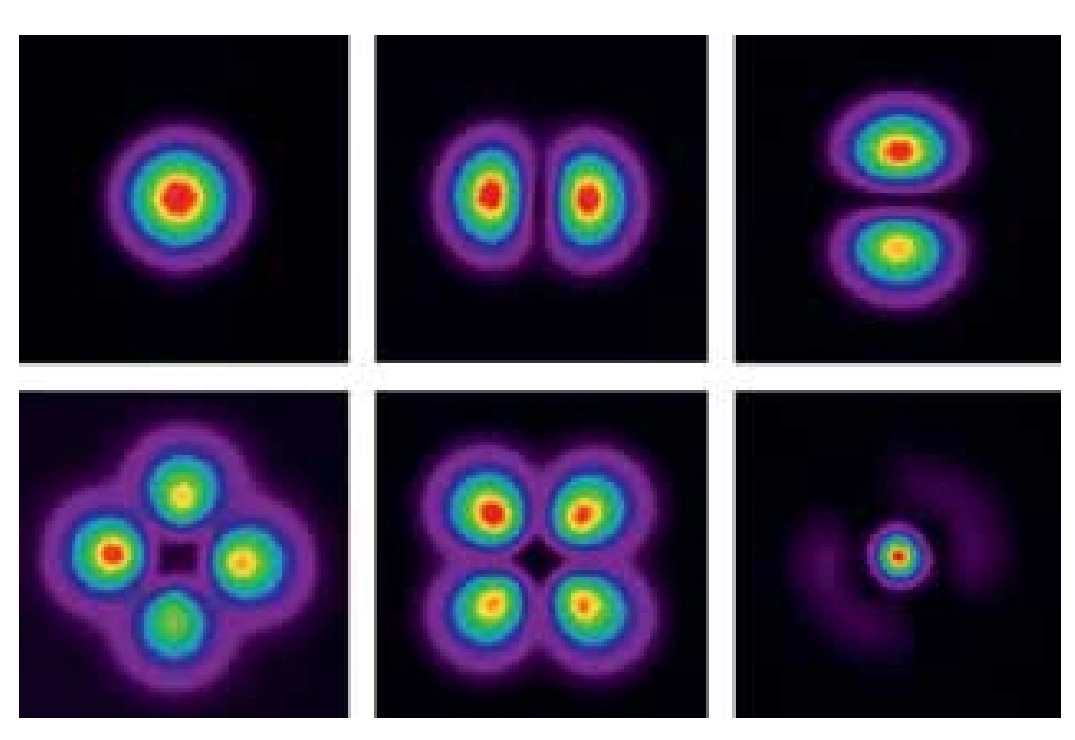
Research publications by Leningrad Laser Systems suggest that the company does more than handle customs paperwork: it develops, tests, and markets the relevant technologies in Russia. LLS also actively fulfills government contracts, supplying equipment such as fiber-drawing towers for manufacturing optical fiber used in fiber-optic cables, plasma research rigs, laser beam homogenizers, multispectral systems, photon counters, optical reflectometers, and optoacoustic modulators. Its customers have primarily been civilian universities and research institutions, including Moscow State University, St. Petersburg State University, KAI, and institutes of the Russian Academy of Sciences, as well as specialized institutes such as VNIIFTRI, VNIOFI, and Voenmekh.
According to court records, LLS has done business with the Ramenskoye Instrument-Making Plant JSC (under sanctions), the Ural Electromechanical Plant, and the Astron Optical-Mechanical Design Bureau, which manufactures drones and thermal imaging systems. Astron also produces laser ranging systems, while NPO GIPO JSC makes military sights, Elektropribor produces laser gyroscopes, and the Ramenskoye Instrument-Making Plant has developed a direct laser command-guidance system for guided missiles and electro-optical sighting systems for helicopters.
These companies are therefore more than intermediaries reselling Chinese or Western equipment. They are highly qualified specialists in the field, capable of testing equipment themselves and fulfilling complex contracts for both civilian research institutions and defense-industry enterprises. The Insider sent requests for comment to Special Systems Photonics and Leningrad Laser Systems but received no response.
More widespread military applications of lasers
Even at a less advanced technological level, Russia’s military-industrial complex is trying, with varying degrees of success, to keep pace in the field of laser technology. The following is a far from exhaustive list of technologies developed or deployed by Russia’s defense industry during the full-scale war. These systems are commercially available in the West and far less sophisticated than the cutting-edge research and development discussed above.
- At the Army-2022 exhibition, the Spectrum-AT Scientific and Production Center presented its Plastun system for multichannel observation of targets in optically opaque environments, equipped with a laser rangefinder and laser illuminator.
- Laser Components manufactures laser gyroscopes for military applications.
- Aviation and Marine Electronics Research and Production Company showcases laser rangefinders and target designators as part of multichannel surveillance systems for drones.
- In its report from the Army-2022 forum, the Regional Center for Laser Technologies (RCLT) showcased (at 3:46) a phased-array base fabricated by laser welding.
- The Inject Research and Production Enterprise developed an industrial laser soldering system.
- Laser cutting is used (at 2:29) at Uralvagonzavod.
- Lasergrad equipment is used to clean the K-3 submarine using lasers.
All this points to active efforts to develop these technologies and reduce Russia’s dependence on imported equipment and systems.
As The Insider has found, advanced Western laser technologies — in the form of equipment, components, and materials — continue to reach Russia. This is one of the few remaining fields in which Chinese manufacturers cannot always fully replace Western suppliers. At the top of the technological hierarchy are quantum computers (which, despite all the promises, may not become cryptographically relevant in the foreseeable future), quantum metrology, and quantum communications. Below these are more widely used, practical applications already in widespread use.
With military needs an overriding state priority and funding for civilian scientific research being cut, there is little doubt that the technologies and equipment entering Russia are intended not to advance fundamental science but to strengthen the capabilities of the military and security services.